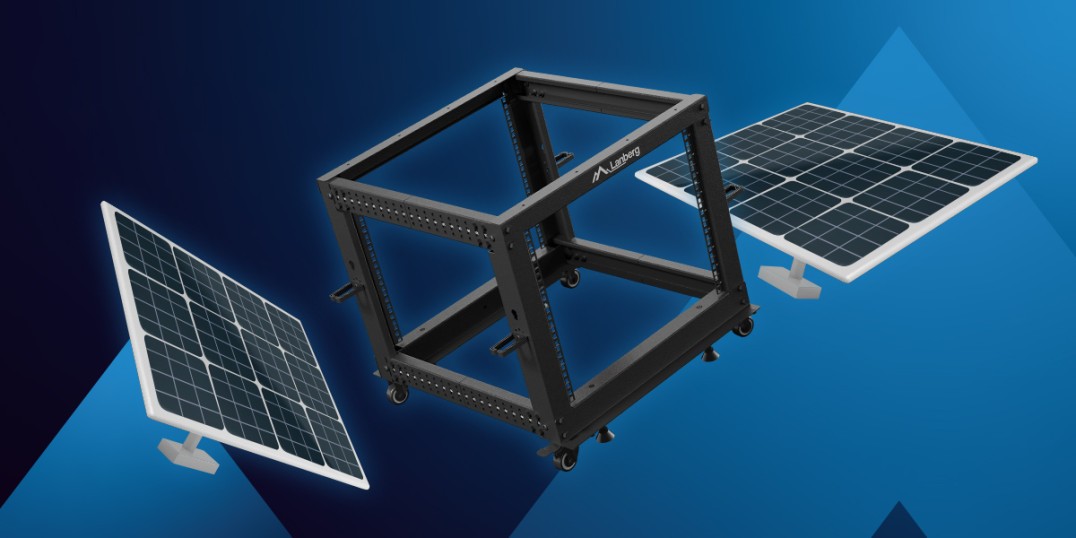
Rising electricity prices, the development of photovoltaics and the growing importance of renewable energy sources mean that energy storage is no longer an add-on to PV installations, but is becoming one of the key elements of a modern energy system. A well-chosen one allows you to store surplus energy produced by the panels, increase self-consumption, reduce power consumption from the grid and realistically reduce electricity bills.
In practice, however, the battery itself is only the beginning. The whole system counts: the connector, the protections, the BMS, the EMS, the inverter, the MPPT, the way it is charged and discharged, and the design in which the components are mounted. One of the most often overlooked elements of such a system is the mounting structure. And that's where open racking comes in - an open design that makes it easier to organize equipment, improves service access and allows better planning of technical space.
Energy storage facilities in Poland
One of the biggest challenges in using photovoltaics is not only producing energy, but also using it at the right time. The demand for electricity in a home, farm or business often arises when the installation produces less energy - in the morning, in the evening or when specific equipment is running. Without energy storage, the surplus from high production hours goes to the grid instead of being used on site.
Energy produced during the day can be used later - in the evening, at night, during higher consumption or in case of grid failure. This not only increases the user's use of the energy produced, but also gives the user greater independence from the grid.
This is especially important at a time when stability of power supply is increasingly important. Energy storage can act as a backup, or emergency power supply in case of a power outage. Depending on the configuration, it can power the most important circuits in the house, office equipment, automation, pumps, servers or production elements. For the home user, this means comfort and lower bills. For the company - business continuity, less risk of loss and greater control over energy costs.
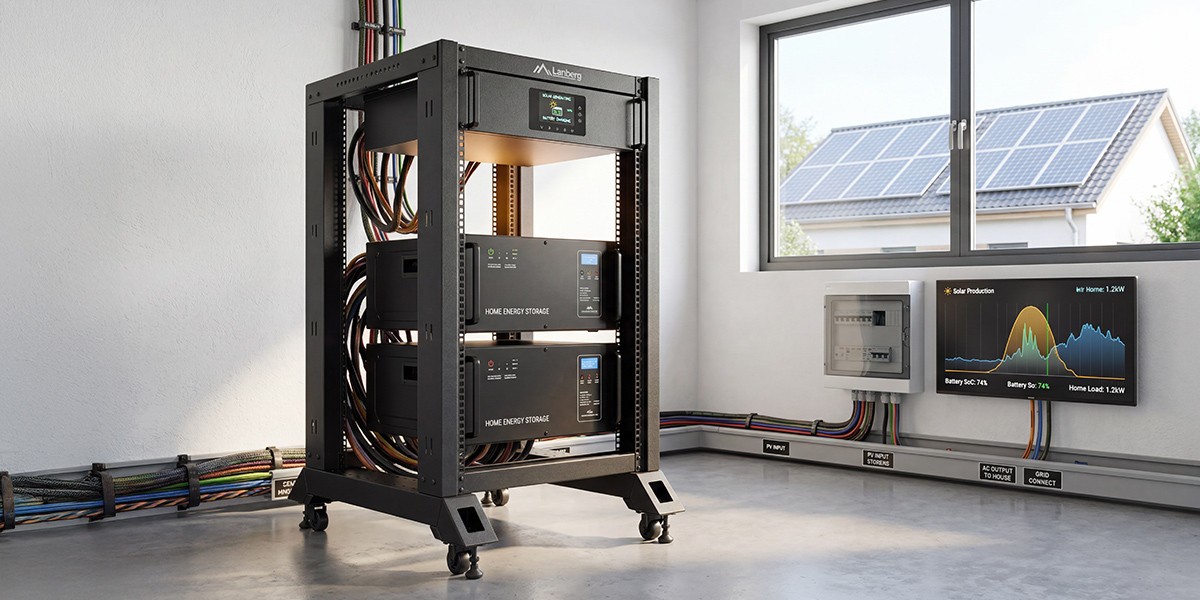
Open rack - open design for greater control of home energy storage
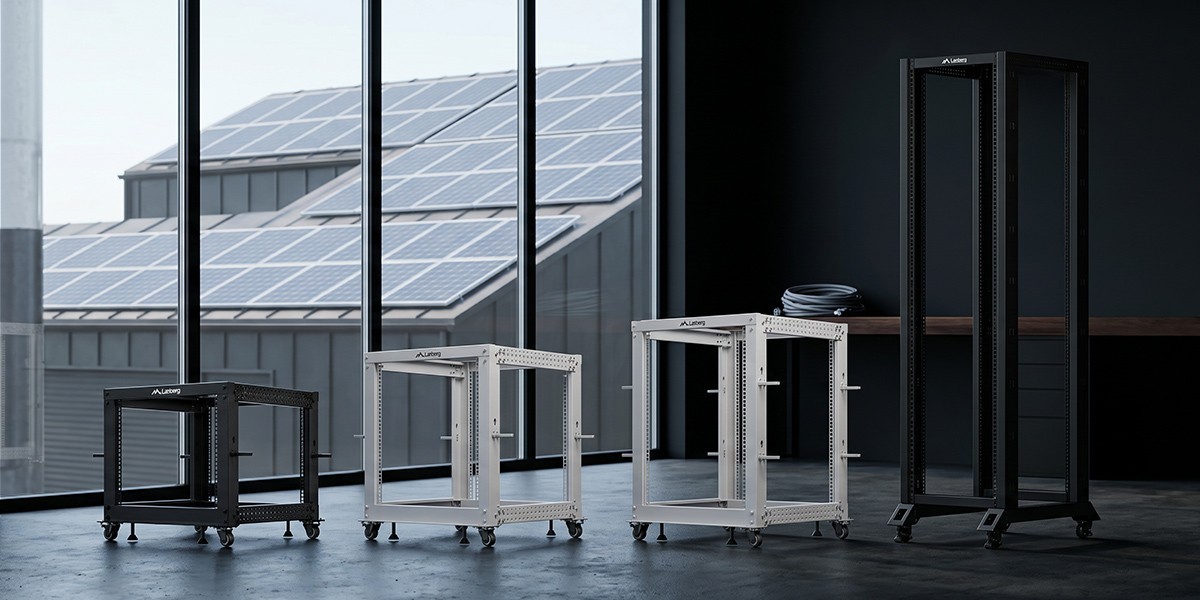
This is a rack structure in which battery modules, auxiliary equipment, protection, controllers, communication elements or technical equipment are mounted in a rack standard. An example of such a solution is the Open Rack 19" 32U 600x800 Lanberg V2, which will prove useful where a larger, orderly mounting space is needed for technical infrastructure.
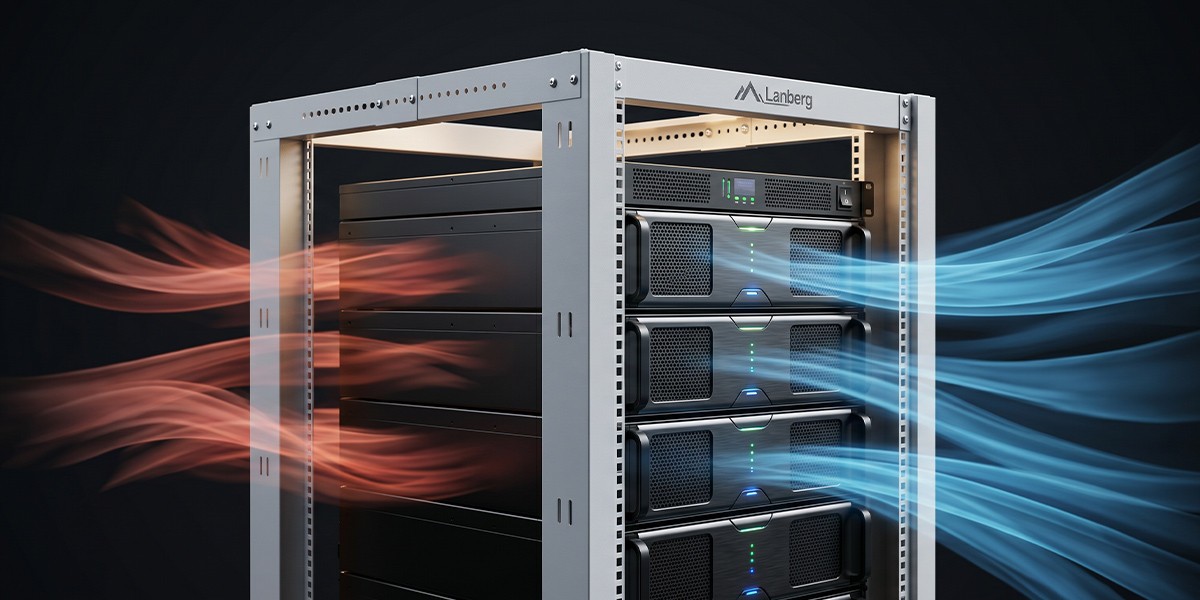
The biggest advantage of the open rack is its openness. Unlike closed battery racks, this design provides free airflow, which is important because the battery generates heat during operation - both during charging and discharging. Good ventilation helps maintain stable operating conditions, which translates into longevity, safety and reliability.
The open rack also makes it possible to quickly locate any connector or wire. In the event of an inspection, the technician has easy access to all components. There's no need to disassemble half the enclosure to check connections, voltages, communications or the state of protection. This is a huge advantage where quick service and minimal downtime are important.
For smaller technical installations, you can also consider compact designs such as Open Rack 19" 9U 600x600-1100, which allows you to organize communication, control or auxiliary equipment in a home, small business or dedicated technical area.
However, it is worth remembering that the open rack should be installed in a properly prepared technical zone, with limited unauthorized access and the required electrical protection.
Why is good ventilation important in an open rack?
Thanks to the natural circulation of air, heat can rise freely upward, while cooler air flows in from the sides and bottom. In larger installations, it is worthwhile to additionally use mechanical ventilation, technical air conditioning, temperature sensors and an intelligent energy storage management system. Such solutions not only improve safety, but also help maintain stable operating conditions throughout the year.
Rack accessories such as cable organizers, shelves, panels, grommets, plugs, fans or power strips also help to organize the mounting space. Thanks to them, it is easier to plan cable routing, separate installation sections and maintain access to components that require periodic inspection.
This is especially important for LiFePO4 batteries, which are considered one of the safest and most durable energy storage technologies. Good quality cells can achieve up to about 6,000 charge and discharge cycles, but their real life depends largely on operating conditions. Temperature control, proper protection and an efficient battery management system allow to extend the battery's operating time and realize its full potential.
LiFePO4 - a technology that suits photovoltaic energy storage
LiFePO4, or lithium-iron-phosphate, batteries are gaining popularity. This is one of the most highly regarded technologies in modern energy storage - stable, durable, safe and well equipped for intensive daily operation.
It works particularly well in photovoltaic installations, where the battery regularly accepts surplus energy during the day and then gives it back when demand in the building increases, such as in the evening or at night. In this way, the energy produced from renewable sources is not lost, but used more consciously, efficiently and independently of current weather conditions.
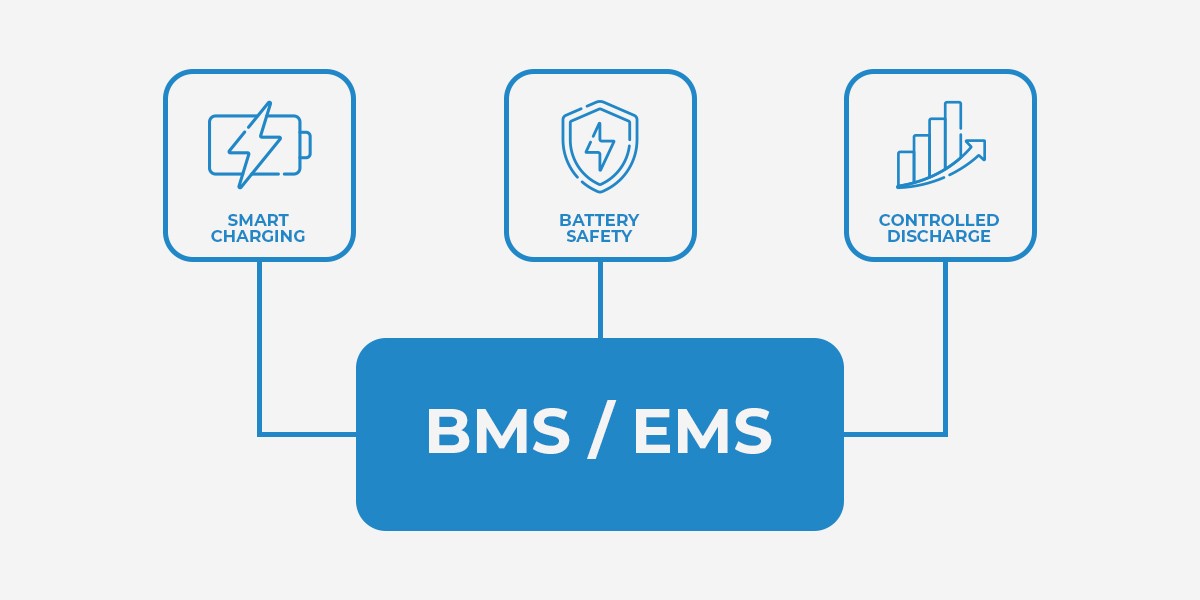
BMS and EMS - intelligent charging system management
Battery Management System is responsible for controlling battery operation. It monitors voltage, temperature, current, charging status and cell balancing. It is the BMS that ensures that the battery is not overcharged, over-discharged or operated outside the safe range.
The Energy Management System manages the flow of energy. It decides when to charge the RES energy storage, when to power the building from the batteries, when to limit the draw from the grid, and when to use the stored energy. In more advanced solutions, it can work with dynamic tariffs, weather forecasting or electric car chargers.
In such systems, communication between devices is also important. Properly selected patchcords, patch panels and connectivity accessories help to organize connections between controllers, monitoring system, network devices and elements of technical infrastructure.
Compact design - more freedom, fewer restrictions in power banks
Thanks to its modular design, storage capacity can be easily adjusted to meet your current needs. If energy consumption increases in the future, a heat pump, air conditioning, an EV charger or a larger photovoltaic installation appears, the system can be expanded with additional modules.
Each module has its own place, wires are routed logically, and access to components remains convenient. This makes the installation look professional, but most importantly, it is easier to operate and safer.
This is important in both home and business applications. Home energy storage often starts with a capacity to match basic energy consumption. A business, on the other hand, may need a larger solution, calculated in hundreds of kWh, or even MW for large projects.
For home, business, RES and off-grid photovoltaic installation
For a single-family home, an energy bank allows you to make better use of RES energy, reduce surrender to the grid and increase energy independence. In combination with a PV installation, the storage can power the house in the evening, at night or in case of grid failure.
In companies, energy storage can play an even broader role. It can reduce peak power consumption, stabilize equipment operation, use on-site renewable energy and increase the company's resilience to power outages. For manufacturing plants, farms, offices, server rooms or service facilities, this can be an investment that translates not only into savings, but also into operational security.
In such places, it is worth thinking of energy storage not just as batteries alone, but as part of a larger technical infrastructure. This includes the mounting structure, protection, communications, energy management and power distribution for auxiliary equipment. PDU strips can be useful in this area, allowing you to organize the power supply for equipment operating within a rack or cabinet.
An investment in independence and lower bills
A well-chosen energy storage is an investment that can work for many years. Its profitability depends on several factors: the price of electricity, energy consumption profile, kWh storage capacity and available support programs.
In Poland, there is growing interest in subsidies for energy storage, especially in combination with solar power. Subsidies can shorten the payback time and make a home energy storage or company storage system more accessible. However, it is worth remembering that the subsidy alone should not be the only selection criterion. The quality of components, warranty and service, expandability and compatibility with the existing installation also count.
A cheap system without good technical support can quickly become expensive to use. In contrast, a well-designed energy storage, based on proven modules, a stable management system and a robust rack structure, can realistically increase grid independence and improve the user's energy security.
Storage technology without compromise
A compact system means thoughtful use of space, logical placement of components and easy service access. A cramped system means ventilation problems, difficult service and greater risk of overheating.
Open rack allows to combine these two worlds: space saving and good organization. The structure can be set up in a technical room, container, production backroom or dedicated installation area. As a result, it does not occupy random space, but becomes an orderly, professional element of the power infrastructure.
This is especially important in enterprises where every meter of space matters, and the installation must be both functional, safe and ready for expansion.
Energy storage warranty and service - the details that matter
It is worth looking not only at the price, but, above all, at the quality of workmanship and fit for a particular system. The structure should have adequate load-bearing capacity, stability and the ability to securely attach modules. Also important are battery spacing, cable routing, access to connectors, grounding capability and compatibility with 48V modules or others used in a particular installation.
It should make the installer's job easier, not more complicated. It should allow for convenient installation, simple service and logical expansion. For larger energy storage units, it is also important to be able to create multiple sections, separate modules and maintain adequate service distances.
It is also worth paying attention to the warranty and service. This is an investment for years, so technical support, parts availability and the ability to respond quickly in case of problems are as important as the parameters written in the data sheet.
Mounting design as practical support for energy storage
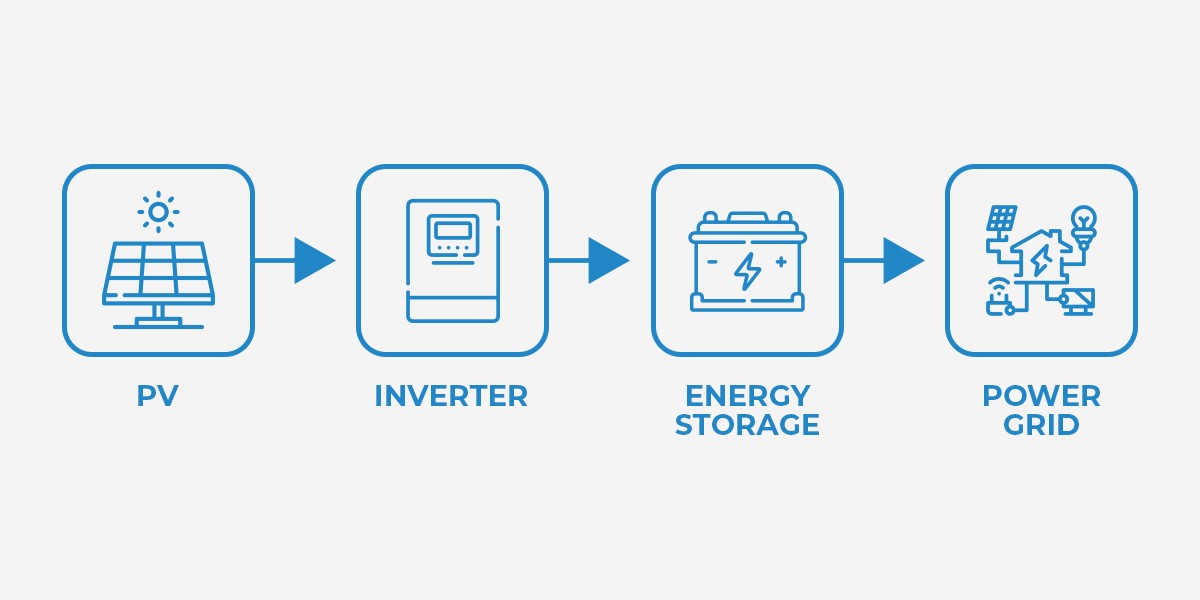
In a well-designed system, every detail matters. The battery is responsible for energy storage. The BMS for module safety. The EMS for intelligent energy management. The inverter for interfacing with the PV plant and the grid. And the rack structure is responsible for keeping the whole thing organized, service accessible and well ventilated.
That's what makes it more than a mounting structure. It is a component that affects the operating culture of the entire energy storage. It makes it easier to control, improves cooling, reduces service time and gives you the ability to expand as your energy needs grow.
A well-chosen open rack from Lanberg can become the base for a tidy technical infrastructure, and complementary rack accessories help maintain a logical layout of cables, power and auxiliary equipment. For the user, this means greater reliability. For the installer, more convenient installation. For the enterprise, greater operational reliability.
Summary
Energy storage is one of the most important components of a modern photovoltaic installation today. It allows to better use the energy produced by PV panels, store surplus energy, power the building in case of grid failure and reduce electricity costs.
Open rack has a very practical but extremely important function in this arrangement. It provides good ventilation, easy access to modules, tidiness and expandability. Thanks to its modular design, the power bank can grow with the user's needs - from home applications to small businesses to ESS for industry and power generation.
It's a solution for those who think about energy not just for the here and now, but for the long term. Because a well-designed energy storage is not just a battery with a specific kWh capacity. It's an investment in reliability, energy security, lower bills and greater independence from the grid.


